Tambul
A double-headed drum that produces a repeated, consistent pulse and acts as the principal rhythmic driver of the Tagunggu’ ensemble.
Strong, continuous tambul strokes shape the music’s dynamics and reinforce the ensemble’s overall rhythmic structure. (Cikgu Rosley’s research)
Like the agung, the tambul forms part of langkapan—an ancestral heirloom with symbolic and spiritual value—and is therefore subject to customary restrictions concerning its care and playing technique. (Cikgu Rosley’s research)
In the past, the tambul was commonly made from wood with a refined goatskin membrane, a wooden frame including suitable root wood, and a brass or iron body. Today, its construction may use metals such as brass and alloy. A drum purchased from a musical-instrument shop may also be used as a contemporary substitute. (Cikgu Rosley’s research; SJ founder)
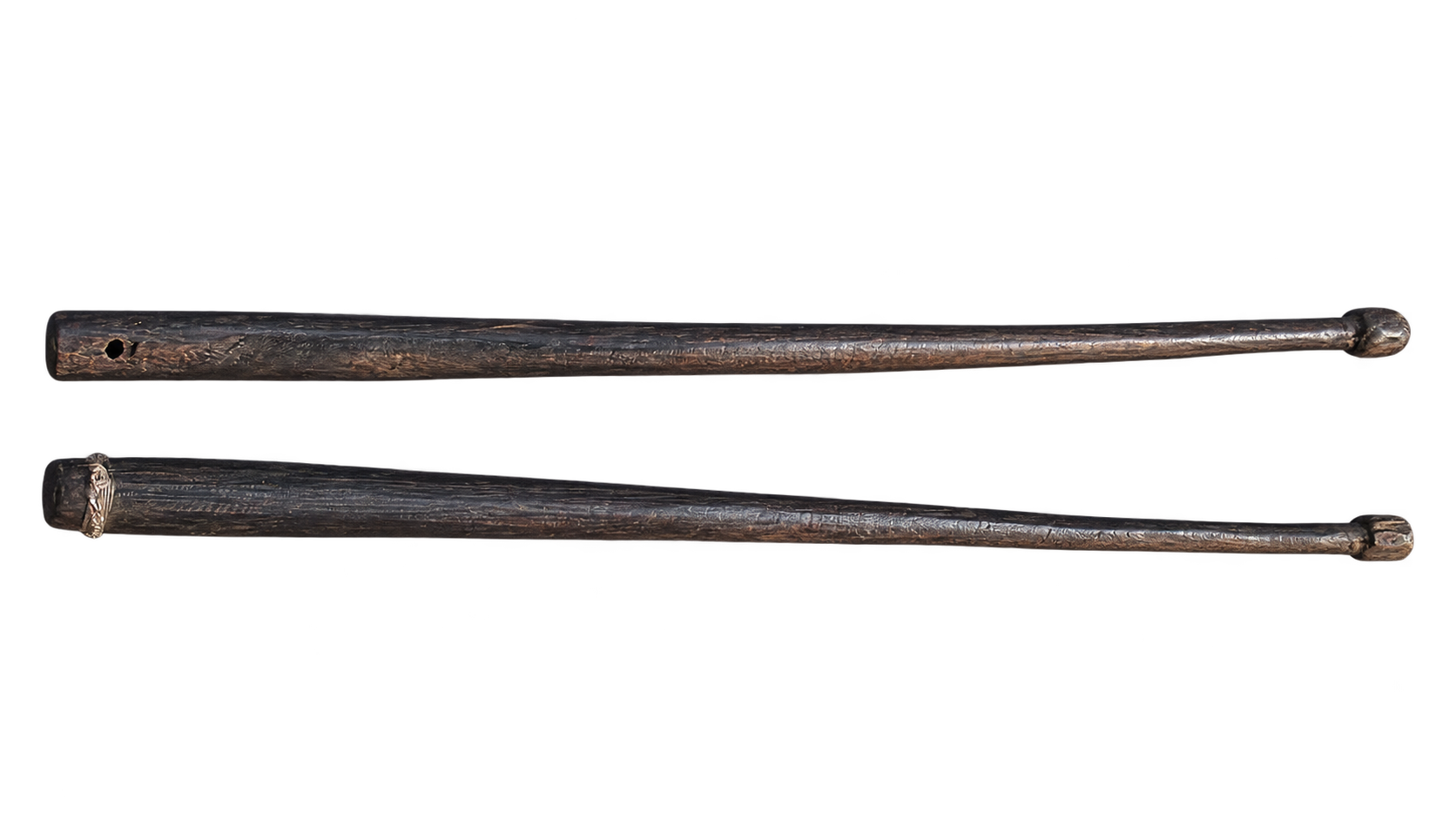
The wooden beater used to strike the tambul is known as tibul. (Cikgu Rosley’s research)
View tibul photo
Hear the instrument
Tambul sound
Press the tambul to hear one recorded stroke that begins directly with the instrument sound.